
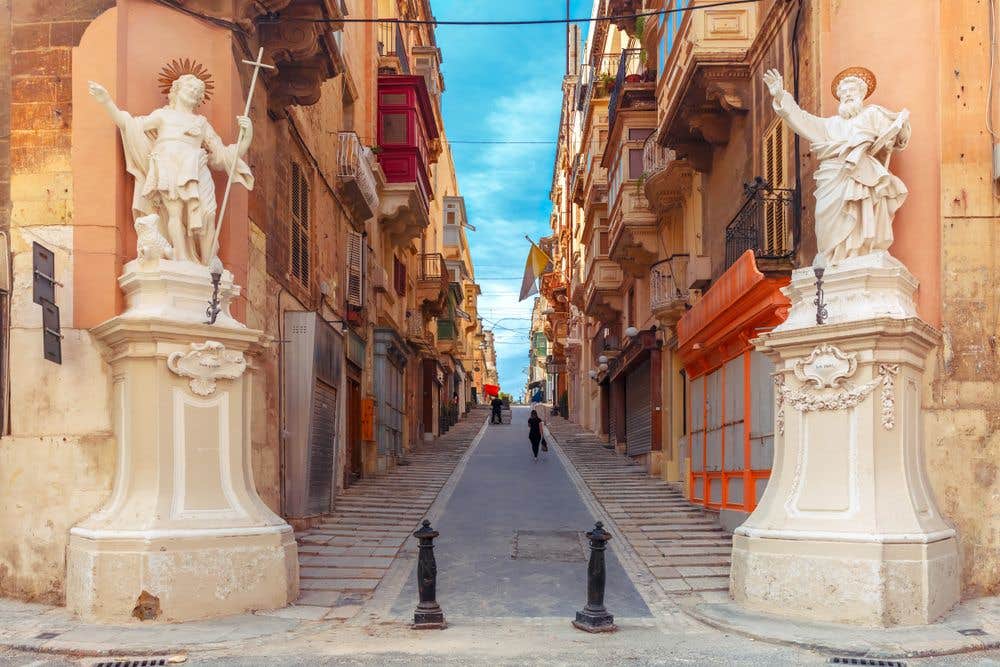


Discover what makes Malta in April such a rewarding time to visit. From pleasant weather and fewer crowds to vibrant local culture and historic cities waiting to be explored, April reveals a side of Malta that many travelers miss. Read on to find out why spring may be the perfect time to plan your trip.
April is one of the quieter times to visit Malta in the Mediterranean. While most travelers reserve their island getaways for the blazing heat of July and August, those who visit Malta in April discover a country that feels calmer and less crowded. And with fully customizable vacation packages to Malta, planning the perfect spring escape has never been easier.
Accommodation is also easier to secure during this time of year. Many hotels in Malta offer better availability and competitive rates in April compared to the busy summer months, allowing you to stay in central locations such as Valletta, Sliema, or St. Julian’s without the peak-season crowds.
Temperatures in Malta in April are warm but not overwhelming. The ancient limestone streets are easy to explore on foot, and the island's layered personality (part Arab, part Italian, part British, entirely its own) comes through with remarkable clarity when the summer crowds have yet to arrive.
This comprehensive Malta in April travel guide covers everything you need to plan a confident, well-timed trip. From the weather across each region of the island to the best things to do and which Malta tours are worth booking, consider this your go-to resource for spring travel in Malta.
Why Visit Malta in April

Visiting Malta in April puts you ahead of the curve in more ways than one. April sits squarely in Malta's shoulder season, which means you get the best of both worlds: favorable weather and manageable crowds.
Here's why April consistently ranks as one of the best times to visit Malta.
Comfortable Spring Weather
The weather in Malta in April is arguably the most appealing aspect of a spring visit. Daytime temperatures are comfortable, making outdoor exploring genuinely enjoyable. You won't need to drain your water bottle every 30 minutes, and you won't be layering up against Alpine cold either.
These mild conditions also make it possible to enjoy the coastline. While it is not peak beach season, the sea is warm enough for a refreshing swim on sunny days. If you plan to spend time in the water, a light wetsuit is recommended, as the sea can still feel quite cool with regular swimwear.
Overall, the climate in Malta in April is ideal for walking archaeological sites, climbing coastal paths, and spending long afternoons in open-air cafes without any discomfort.
Better Value for Money
Flights and accommodation in Malta in April carry significantly lower price tags than the peak summer months of June through August. Many hotels still run shoulder-season rates, and popular tours in Malta are easier to book at short notice.
You can compare cheap flights to Malta and browse Malta travel packages for some of the best spring deals available. For budget-conscious travelers, Malta in April represents one of the best value windows in the entire Mediterranean calendar.
Fewer Crowds at Major Attractions
Malta’s iconic destinations, from Valletta and Mdina to the ancient Hagar Qim temples, feel far more atmospheric when you can explore them without the distraction of large tour groups. Visiting Malta in April means you can linger longer, take unobstructed photographs, and actually hear your guide. The experience is simply more personal and unhurried, exactly what a proper holiday should feel like.
Nature at Its Spring Peak
Spring transforms the Maltese landscape in ways that summer cannot. Wildflowers carpet the rocky countryside, citrus groves bloom in village gardens, and the coastal cliffs around Dingli and Gozo turn shades of green that vanish entirely by June. Malta in April is one of the most visually striking versions of the island you can experience all year.
Weather in Malta in April

Malta sits at 35°N latitude in the center of the Mediterranean, giving it a subtropical climate that is warm, dry, and reliably sunny for most of the year. April falls in the spring transition period: winter's rain is mostly behind you, and summer's heat hasn't yet arrived. The result is a month that is mild, occasionally breezy, and punctuated by brief showers that rarely ruin a full day's plans.
Below is a breakdown of how conditions typically evolve across the month.
Period | Daily High | Nightly Low | Rain Days | Sunshine | Humidity |
|---|---|---|---|---|---|
Early April | 63–66 F (17–19 C) | 50–54 F (10–12 C) | ~4 days | ~8 hrs | ~68% |
Mid April | 66–70 F (19–21 C) | 54–57 F (12–14 C) | ~3 days | ~9 hrs | ~65% |
Late April | 70–73 F (21–23 C) | 55–59 F (13–15 C) | ~2 days | ~9–10 hrs | ~62% |
One island-wide weather wildcard to keep in mind is the Sirocco wind, a hot, dry wind blowing in from the Saharan desert that is more frequent in spring and autumn than at any other time of year.
When a Sirocco event hits, it raises temperatures across the whole archipelago by several degrees and brings dusty, hazy conditions. These episodes usually last one to two days and affect all regions equally, temporarily erasing the regional differences described below.
Outside of Sirocco events, the prevailing wind comes from the northwest and is the primary reason why northern Malta and Gozo feel slightly cooler than the south in April.
Weather in North Malta in April

Key areas: Mellieha, St. Paul's Bay, Bugibba, Qawra, Marfa Ridge
The north of Malta averages around 61 F (16 C) in April, making it the coolest part of the main island during spring. The dominant northwesterly winds blow directly across this exposed corner of the island, and there are few natural barriers to slow them down. The result is a region that is reliably breezy throughout April, particularly along the coast and on any elevated ground.
Weather in Gozo in April

Key areas: Victoria (Rabat), Marsalforn, Xlendi, Dwejra, Mgarr
Gozo sits just north of the main island and is consistently the coolest part of the Maltese archipelago in April. The same northwesterly winds that cool the north of Malta arrive at Gozo with even more force, having crossed open water.
Gozo is also less urbanized and more elevated in places, both of which amplify the cooling effect. That said, the temperature difference between Gozo and the south of Malta is typically just 36 F (2 C), which is noticeable but not dramatic.
What Gozo lacks in warmth, it more than compensates for in spring scenery. The hills are at their lushest, the wildflowers are extraordinary, and the dramatic coastline is best appreciated when the summer crowds haven't yet taken over.
Weather in Central Malta in April

Key areas: Valletta, Floriana, Mdina, Rabat, Attard, Mosta, Naxxar
The central region averages 61 F (16 C) in April on paper, the same as the north. But in practice, it consistently feels warmer and more sheltered.
Inland towns like Mdina, Attard, and Mosta are protected from the coastal wind by their elevated positions and surrounding countryside, while Valletta's dense limestone architecture absorbs daytime heat and releases it slowly, creating a notably warmer microclimate in the city's narrow streets.
For sightseeing, the central region offers some of the most comfortable April weather conditions on the island: warm enough to enjoy extended outdoor time, cool enough to walk for hours without overheating.
Weather in Eastern Malta and the Harbour Area in April

Key areas: Sliema, St. Julian's, Paceville, Msida, Gzira, Birgu (Vittoriosa), Senglea (L-Isla), Cospicua (Bormla)
The eastern coastline and harbour area sit between the sheltered Grand Harbour to the south and the more exposed northeastern coast, giving it a microclimate that is slightly warmer and less windy than the north, but cooler than the south.
April temperatures across this region typically range from 63 to 68 F (17 to 20 C) during the day, with evenings dropping to around 54 to 57 F (12 to 14 C). The waterfront areas benefit from sea breezes that keep the air fresh without the raw edge you'd feel along the northern coast.
Weather in South Malta in April

Key areas: Marsaxlokk, Birzebbuga, Marsascala, Zurrieq, Blue Grotto coast, St. Thomas Bay
The south is consistently the warmest part of Malta in April, averaging around 64 F (18 C), roughly 36 F (2 C) warmer than the north, central, and Gozo regions.
The reason is largely geographical: the south faces away from the dominant northwesterly winds, sits at a lower elevation across most of its coastal terrain, and benefits from more open sun exposure throughout the day.
On a clear April day, the southern coast can feel genuinely summery: warm enough to sit outside in a t-shirt in the early afternoon, with a breeze light enough to barely stir the fishing boat flags in the harbour.
Best Places To Visit in Malta in April
Northern Malta is home to some of the island’s most scenic coastlines, historic sites, and charming seaside towns. Visiting Northern Malta in April allows you to explore these places with mild spring weather, fewer crowds, and excellent conditions for sightseeing.
Valletta in April

Valletta is Europe's smallest national capital and one of its most rewarding cities to explore at street level. In April, the city is sunlit without being scorching, and the Grand Harbour views from the Upper Barrakka Gardens are some of the most beautiful you'll find anywhere in the Mediterranean at this time of year.
You can book a 3-hour walking tour of Valletta led by a licensed guide to get the most out of the city's extraordinary density of history, or explore a 5-day city break in Valletta with hotel and itinerary included for a fully arranged spring getaway.
If you need a hassle-free arrival, a private transfer from Malta International Airport to your Valletta hotel takes around 20 minutes and removes the stress of navigating the bus system with luggage.
Mellieha in April

Mellieha sits on one of the highest ridges in Malta, which makes it particularly susceptible to the wind. On calm days in April, it is spectacularly scenic. The hilltop town overlooks Mellieha Bay, one of Malta's few proper sandy beaches, and the views toward Comino and Gozo are extraordinary.
On windier days, the exposed ridge can feel noticeably cooler than the temperature forecast suggests, so a jacket is essential if you're planning to walk the paths around the town or visit the nearby Gnejna and Ghadira Bay nature reserves.
Mellieha is also the departure point for several Malta boat tours heading to Comino's Blue Lagoon, which in April offers turquoise water with far fewer crowds than in summer.
St. Paul's Bay in April

St. Paul's Bay, which includes the adjoining resort areas of Bugibba and Qawra, is the largest tourism hub in northern Malta and one of the most popular bases for Malta in April visitors. The bay itself is sheltered enough to feel pleasant on most spring days, and the promenade along the waterfront is one of the most enjoyable walking routes on the island at this time of year.
Temperatures here in April hover around 61 to 66 F (16 to 19 C) during the day, with sea breezes keeping things fresh and comfortable for long outdoor strolls.
The boat cruise from St. Paul's Bay to Comino Island and the Blue Lagoon is one of the most popular activities from this area in April, and the calmer spring seas make for a much smoother ride than the crowded summer crossings.
There's also the Malta National Aquarium at Qawra, a worthwhile indoor option if the wind picks up and the weather turns briefly showery. You can book a Malta National Aquarium ticket in advance for a smooth and hassle-free visit.
Xlendi in April

Xlendi is a dramatic inlet on Gozo's southwest coast, flanked by sheer limestone cliffs that drop to a narrow strip of waterfront restaurants and cafes. It is slightly warmer and more sheltered than Marsalforn, thanks to the cliffs that block the northwesterly wind.
In April, the light in Xlendi is exceptional. The morning sun hits the cliffs at an angle that makes the golden limestone glow, and the water in the bay takes on the vivid turquoise that most people only associate with summer.
The sailing tours that run from Xlendi are worth booking even in April. The sea is calm enough for small boat access, and the caves here are some of the best in the archipelago.
Mdina in April

Mdina, the Silent City, is one of the most atmospheric places in all of Europe in April. The medieval walled town sits on a ridge in the center of the island, which means there's usually a gentle breeze even on still days, but the ancient walls provide shelter in the interior lanes.
Before the summer coach tours arrive, the narrow streets of Mdina feel genuinely silent. You can hear your footsteps, the church bells, and not much else. Combined with a visit to the Catacombs of St Paul in adjoining Rabat, a morning in Mdina in April is one of the best half-days you can spend in Malta.
Attard in April

Attard is a quiet village that punches above its weight as a base for Malta in April. The San Anton Gardens, one of the most beautiful public gardens on the island, are at their peak in April, with flowering trees, exotic plants, and shaded walkways that provide a welcome contrast to the limestone everywhere else.
The gardens back onto the San Anton Palace, the official residence of the President of Malta, and the whole setting has a serenity that the rest of the island rarely offers. Attard's central location puts Valletta, Mdina, and the airport all within 15 to 20 minutes, making it an ideal base for day trips across the island.
Sliema in April

Sliema is the most cosmopolitan suburb of Valletta, a busy waterfront strip of restaurants, cafes, boutiques, and apartment buildings that hugs the northern shore of Marsamxett Harbour.
In April, the Sliema promenade (Triq It-Torri) is one of the best morning walks on the island. The sea is vivid, the air is fresh, and the views across the harbour to Valletta's skyline are magnificent.
The Ferries area at the southern end of Sliema is the departure point for the short ferry crossing to Valletta, which is far more scenic than the bus and takes only five minutes.
Sliema is also an excellent base for day trips by boat: you can join the cruise to Gozo and Comino departing from Sliema, which is one of the most popular full-day tours in Malta in April.
For accommodation, hotels in Sliema range from budget apartments on the promenade to full-service 4-star properties with harbour views, and April rates are significantly lower than peak summer prices. If you prefer to drive, car rental in Sliema is available from multiple providers and gives you full flexibility to explore the rest of the island.
St. Julian's in April

St. Julian's sits just north of Sliema and has a livelier, younger character. It's Malta's main nightlife and dining hub, centred around Spinola Bay and the Paceville entertainment district.
In April, the outdoor terraces around Spinola Bay begin to come to life again after the quieter winter months. The bay itself, with its colourful luzzu fishing boats and waterfront restaurants, is one of the most photogenic spots on the island at this time of year.
The Three Cities in April

Across the Grand Harbour from Valletta lie the Three Cities: Birgu (Vittoriosa), Senglea (L-Isla), and Cospicua (Bormla). These former fortified towns predate Valletta and are among the most historically significant yet least-visited areas in Malta.
In April, the labyrinthine streets of Birgu are extraordinary to wander; the absence of summer tourism means you often have entire alleys entirely to yourself. Fort St Angelo, which overlooks the Grand Harbour, offers some of the finest views of Valletta from the water in the entire archipelago.
You can reach the Three Cities easily from Valletta via the short harbour ferry crossing from Valletta's Waterfront, one of the most scenic five-minute boat rides you'll find anywhere.
Marsaxlokk in April

Marsaxlokk is the undisputed highlight of southern Malta, and April is one of the very best times to visit. The village's famous Sunday fish market runs along the harbour promenade, where the colourful luzzu boats bob against the quayside, and vendors sell everything from fresh lampuki and octopus to lace, honey, and local pottery.
The seafood restaurants here are among the finest on the island. Booking a table for Sunday lunch in April, when the market is winding down and the day is warming up, is one of those simple pleasures that Malta in April consistently delivers.
Marsaxlokk is also the starting point for southern Malta day trips that include the Blue Grotto sea caves and the coastal temple sites.
Blue Grotto in April

The Blue Grotto is one of Malta's most iconic attractions, a series of sea caves on the southwestern coast near Zurrieq, where the water takes on a luminescent cobalt blue colour as sunlight refracts through the cave openings.
April is an excellent time to visit. The smaller boats that carry visitors into the caves operate in calmer conditions than in summer, the morning light is optimal for photographs (visit before 11:00), and the cliffside viewing platform above the caves offers views across to Filfla island without the August crowds.
The surrounding Zurrieq area is characteristically warm and sheltered in April, sitting in a slight natural bowl that blocks the wind particularly effectively.
Best Things To Do in Malta in April

The activities available in Malta in April cover an impressive range, from deep history and archaeological discovery to sailing, food tours, and scenic village hops. The mild weather makes outdoor exploration genuinely enjoyable, and the relative quiet of shoulder season means experiences feel more authentic and less rushed.
Below are the best things to do in Malta in April worth prioritizing.
Walk Valletta with a Licensed Guide

A guided walking tour is the best way to get under the skin of Valletta on a first visit.
The city rewards curiosity. There are stories behind almost every doorway, but without context, much of it can look like beautiful but undifferentiated limestone.
A 3-hour walking tour of Valletta with a licensed local guide takes you through St John's Co-Cathedral, the Grand Master's Palace, the Upper and Lower Barrakka Gardens, and the city's most atmospheric backstreets, with commentary that spans the Knights of St John, the Ottoman sieges, and the WWII bombing campaigns that left Valletta one of the most heavily decorated cities in the British Empire.
Take a Boat Tour to the Blue Lagoon

Even if the sea is too cool for comfortable swimming, Malta in April is excellent for coastal boat tours. The calmer spring seas make for smooth sailing, and the coastline, with its sea caves, limestone arches, and hidden coves, is best appreciated from the water.
The Blue Lagoon on Comino is far less crowded in April than in peak summer, which makes the famous turquoise water considerably more impressive. Options include the catamaran tour to the Blue Lagoon departing from Bugibba, the boat cruise from St. Paul's Bay to Comino and the Blue Lagoon, and the half-day Blue Lagoon and Crystal Lagoon cruise from Mellieha.
Discover Gozo on a Full-Day Jeep Tour

Gozo is more rewarding in April than at almost any other time of year. The hills are green, the wildflowers are everywhere, and the absence of summer tourism means the villages feel genuinely lived-in rather than staged.
The full-day Jeep tour of Gozo departing from Malta covers the island's major highlights, Dwejra, Victoria Citadella, Ramla Bay, Ggantija Temples, and the dramatic cliffs, with the added fun of exploring Gozo's rougher tracks in an open-top vehicle.
Hotel pickup is included, and the itinerary is comprehensive enough to make it genuinely the best single-day trip available from Malta in April.
Take a Cruise to Gozo and Comino from Sliema

Taking a cruise to Gozo and Comino is one of the easiest ways to experience Malta’s neighboring islands. For a more leisurely approach to the sister islands, the full-day cruise to Gozo and Comino departing from Sliema combines both islands in a single boat trip, with swim stops at the Blue Lagoon and time ashore in Gozo.
The April sea conditions make the crossing smooth and pleasant, and the boat deck is large enough to find a quiet spot even if the tour is at capacity. This is one of the most popular activities in Malta in April for a reason. It covers enormous ground with minimal planning effort.
Visit the Prehistoric Temples

Among the most extraordinary things to do in Malta in April is visiting the prehistoric megalithic temples that predate both Stonehenge and the Egyptian pyramids. Sites such as Hagar Qim, Mnajdra, and the Tarxien Temples are accessible, well-presented, and genuinely awe-inspiring.
April's cooler temperatures make wandering these open-air sites far more comfortable than visiting in the heat of July or August. Full-day temple tours departing from Valletta typically combine these sites with the Dingli Cliffs viewpoints and traditional village stops along the southern coast.
If you prefer a guided experience, consider booking cultural tours in Malta that include transport and expert commentary. Options range from half-day temple visits to comprehensive full-day itineraries that cover multiple archaeological sites and viewpoints, making it easy to explore Malta’s prehistoric heritage in depth.
Wander the Silent City of Mdina

Mdina in April is one of the most atmospheric walks you can take anywhere in Europe. The medieval walled town's narrow lanes are at their quietest before summer coach tours arrive, and the spring light on the pale limestone is extraordinary.
Pair a visit to Mdina with Rabat for a tour of the Catacombs of St Paul for a half-day visit that traces nearly 2,000 years of Maltese history in a compact and easy-to-explore circuit.
The Dingli Cliffs, a 20-minute drive from Mdina, add dramatic coastal scenery as a counterpoint to the enclosed medieval streets. A Mdina and Dingli Cliffs tour offers a convenient way to experience both Malta’s historical landmarks and coastal scenery in a single outing.
Festivals and Events in Malta in April

One of the most significant cultural events that can fall during Malta in April is Easter.
Malta takes Holy Week extremely seriously. Elaborate religious processions wind through village streets after dark, life-size statues of saints are carried on ornate platforms by candlelight, and church bells mark each stage of the liturgical calendar with theatrical fervor.
Towns such as Zebbug, Qormi, Valletta, and Birgu are among the best places to experience these processions. If your Malta in April trip overlaps with Holy Week, attending at least one village procession is an experience that goes far beyond ordinary sightseeing.
Towns such as Zebbug, Qormi, Valletta, and Birgu are among the best places to experience these processions. In some cases, such as the Good Friday procession in Zejtun, the event can also be visited as part of an organized afternoon tour. If your Malta in April trip overlaps with Holy Week, attending at least one village procession is an experience that goes far beyond ordinary sightseeing.
Another highlight of the season is Festa Frawli (Strawberry Festival), held annually in Mgarr. This lively one-day event celebrates local strawberries with food stalls, desserts, fresh produce, and traditional music, offering a more relaxed and family-friendly atmosphere compared to the solemnity of Holy Week.
The Malta International Fireworks Festival sometimes falls in late April, with spectacular displays launched from the fortifications of Valletta and from boats in the Grand Harbour. Teams from across Europe compete, and the event is free to watch from the waterfront.
Local village festas begin their season in April too, bringing brass bands, elaborately decorated streets, and an unmistakably Maltese sense of communal celebration to town squares across the island. Check Malta's public events calendar before your trip to confirm exact dates during your specific travel window.
Practical Tips for Malta in April

To make the most of your April trip to Malta, it helps to plan ahead for the island’s variable spring weather, local customs, and seasonal schedules. From packing the right layers to understanding payment methods, language, and Holy Week schedules, these practical tips ensure a smooth and enjoyable experience across Malta and Gozo.
What To Pack
Packing for Malta in April calls for layers rather than bulk. Light trousers or jeans, breathable tops, a compact rain jacket, comfortable walking shoes, and a light sweater for evenings cover most situations.
Sunscreen is worth bringing even in spring; the Mediterranean sun is stronger than it appears, particularly when reflected off the island's white and golden limestone. A small umbrella is useful insurance against the occasional spring shower, which can appear quickly and pass just as fast.
For Gozo and the northern coastal paths, a windproof layer is genuinely useful.
Currency and Payments
Malta uses the Euro (EUR). ATMs are widely available across the island, and card payment is accepted at the vast majority of restaurants, shops, and tourist facilities. Cash is still useful for smaller markets, village shops, and bus fares if you're not using a Tallinja card.
Language
English is an official language alongside Maltese, making communication effortless throughout the island. Most menus, signs, and tours are available in English, and the vast majority of locals in tourist-facing roles are fluent.
Maltese itself is a fascinating language, a mix of Semitic roots with heavy Italian, French, and English influence. A few words of greeting will always be appreciated.
Easter and Holy Week Practicalities
If Easter falls during your visit to Malta in April, be aware that some shops, museums, and smaller attractions may operate reduced hours during Good Friday and Easter Sunday.
Many restaurants remain open, but booking ahead is advisable for the more popular spots in Valletta and Sliema. The Holy Week processions typically begin in the evening and run late. Plan any early-morning departure on those days with this in mind.
Malta in April Is Worth the Trip

If you've been weighing up when to visit the Mediterranean, let Malta in April make the case for spring travel. The weather is kind across the whole island, warmest in the sheltered south, freshest in the north and on Gozo, and most comfortable for sightseeing in the central limestone cities of Valletta and Mdina.
The prices are fair, the crowds are manageable, and the island reveals a more genuine version of itself when the summer machine hasn't yet kicked into gear.
You can walk ancient temples in relative peace, eat in restaurants that still cater largely to locals, and explore coastlines that feel more like discovery than tourism. Malta in April offers something that peak season rarely can: the feeling that you've arrived at exactly the right moment.
Whether you're booking a 5-day city break in Valletta, a full-day Jeep adventure across Gozo, or simply comparing flights to Malta International Airport to find the best spring deal, Malta in April is a choice you won't regret.
Frequently Asked Questions: Malta in April
This FAQ section addresses the most common questions about traveling to Malta and Gozo in April, including climate, regional temperatures, sightseeing, beaches, flight options, and recommended trip lengths.
Is Malta in April too cold for the beach?
The sea temperature in Malta in April averages around 63 F (17 C), which most visitors find too cool for relaxed swimming. However, boat tours, coastal walks, and the Blue Lagoon on Comino are all popular and enjoyable without requiring you to swim.
Beach cafes begin reopening their terraces in April, so sunbathing on the sand is perfectly pleasant even if you stay dry. The south coast beaches, particularly around Birzebbuga and Marsaxlokk, are the most sheltered and warmest for sitting out in April sunshine.
Which part of Malta is warmest in April?
The south, particularly the Marsaxlokk and Birzebbuga coastal area, is consistently the warmest region in Malta in April, averaging around 64 F (18 C) compared to 61 F (16 C) in the north, central, and Gozo regions.
If warmth is a priority, base yourself in or plan day trips to the southern coast. The Three Cities and Sliema, both in the eastern harbour area, also tend to run slightly warmer than the north due to their more sheltered positions.
Is Malta crowded in April?
Compared to the peak summer months, Malta in April is considerably less crowded. Easter week and public holiday weekends can bring temporary spikes in visitor numbers at major sites, but the overall atmosphere remains relaxed. Attractions such as Hagar Qim, Mdina, the Blue Grotto, and the Blue Lagoon are all far more accessible in April than in July or August.
How many days do you need in Malta in April?
A minimum of five to seven days allows you to explore Valletta properly, take a full day trip to Gozo, visit the prehistoric temples and southern coast, and spend time in at least two or three traditional villages. Those with ten days can cover all five regions described in this guide at a comfortable pace, including multiple boat trips, and take a second day on Gozo.
Is Gozo worth visiting in Malta in April?
Absolutely. Gozo in April is lush, peaceful, and extraordinarily beautiful. The hills are at their greenest, the air is crisp, and the dramatic sea views are at their clearest before summer haze sets in.
With fewer tourists than the main island, you can explore Gozo's villages, cliffs, and prehistoric Ggantija Temples at a genuinely unhurried pace. The cooler April temperatures also make it the best month for a clifftop hike or an open-top Jeep tour across the island's more rugged terrain.
Are there direct flights to Malta in April?
Yes, Malta International Airport receives direct flights from across Europe throughout April. You can compare all available flights to Malta across airlines and dates to find the best April fares.
